
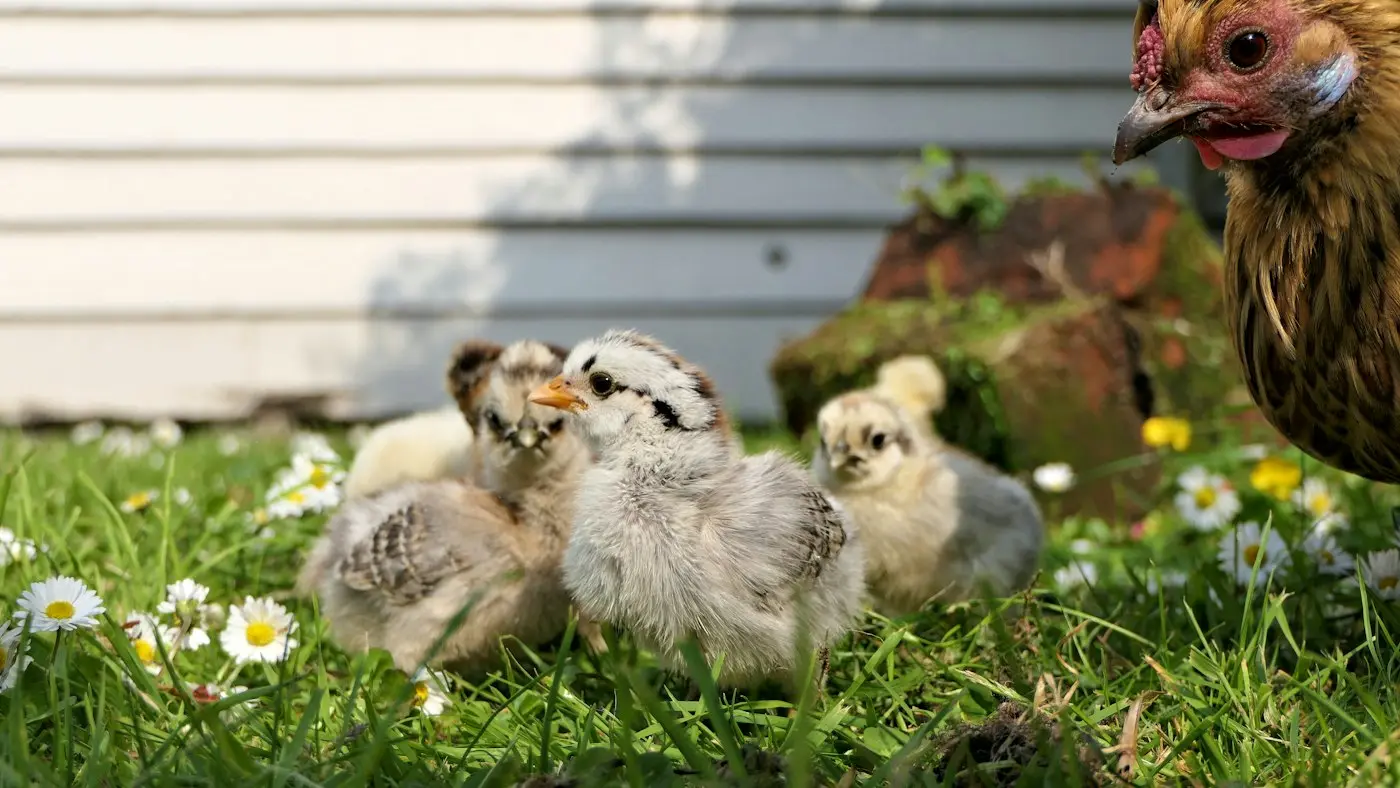
Quick answer: A brooder heater plate keeps chicks warm the way a mother hen does, with far less fire risk than a heat lamp. The RentACoop 12×12″ adjustable plate is the most trusted option. For a lower price, the Chick Brooder Heater Plate with almost a thousand ratings works well for a small batch. Choose a plate with an anti-roost cover and adjustable legs.
How we picked: we compared specifications and buyer reviews on Amazon.com and looked for recurring problems. We have not tested every product in person.
Heat lamps are behind many coop and garage fires every spring. Heater plates are the modern alternative: chicks go under the plate to warm up and come out to eat, drink and explore, just like with a broody hen. They also use much less electricity.
At a glance
| Product | Best for | |
|---|---|---|
| RentACoop 12×12″ Adjustable Heating Plate | Best overall | Check on Amazon |
| Chick Brooder Heater Plate for Baby Chicks | Best value | Check on Amazon |
| Chick Brooder Heater with Anti-Roost Cone | Easy to keep clean | Check on Amazon |
| Tetuga Brooder Heat Plate 12×16″ | For bigger batches | Check on Amazon |
The best brooder heater plates
RentACoop 12×12″ Adjustable Heating Plate
A sturdy, adjustable heating plate with a foldable anti-roost cover and more than a thousand ratings. Warms up to about 15-20 chicks.
- 1,000+ ratings
- Adjustable legs
- Anti-roost cover
- Higher price than generic plates
Chick Brooder Heater Plate for Baby Chicks
A low-cost plate with almost a thousand ratings. A great choice for a first batch of chicks.
- Hundreds of ratings
- Affordable
- Easy to set up
- Smaller warming area
Chick Brooder Heater with Anti-Roost Cone
A heater with a cone-shaped top so chicks cannot roost on it and soil it. Popular and well rated.
- Cone top stays clean
- Constant temperature
- Well rated
- Cone takes some height
Tetuga Brooder Heat Plate 12×16″
A larger 12×16″ plate for bigger groups of chicks or ducklings.
- Larger area
- Adjustable height
- Good ratings
- Needs a bigger brooder box
Heater plate vs heat lamp
| Heater plate | Heat lamp | |
|---|---|---|
| Fire risk | Very low | High (hot bulb, can fall) |
| Electricity | About 20-60 W | About 250 W |
| Chick behavior | Natural: in and out like under a hen | Constant light and heat |
| Upfront cost | Higher | Lower |
How to set up a heater plate
- Set the plate so chicks can just stand under it: their backs should lightly touch the underside.
- Raise it about 1/2 inch each week as they grow.
- Place food and water away from the plate, so chicks move around.
- Watch them: huddled under the plate all the time means too cold; staying far away means too warm.
- In a cold garage, add a cover or blanket over part of the brooder to hold the warmth.
How many chicks fit under a plate?
As a rule of thumb, a 10×10″ plate warms around 10-15 chicks and a 12×12″ plate 15-20 chicks for the first weeks. As they grow, they need more space, so plan a second plate or a bigger one for larger batches.
👉 Raising chicks this spring? See the best egg incubators and how much space they will need later in the space guide.
FAQ
Is a heater plate better than a heat lamp?
For most people, yes. It is much safer, uses less electricity and lets chicks rest in the dark at night, like under a hen.
How long do chicks need a heater plate?
Usually 4 to 6 weeks, until they are fully feathered. In cold weather they may need it a little longer.
Can a heater plate keep chicks warm in a cold garage?
Yes, if the brooder is draft-free. In very cold spaces, cover part of the brooder to hold the heat around the plate.
How high should a brooder plate be?
Low enough that chicks touch the warm underside with their backs. Start at about 2 inches for day-old chicks and raise it as they grow.